Winter Tire Laws and Recommendations in Each Canadian Province (2025)
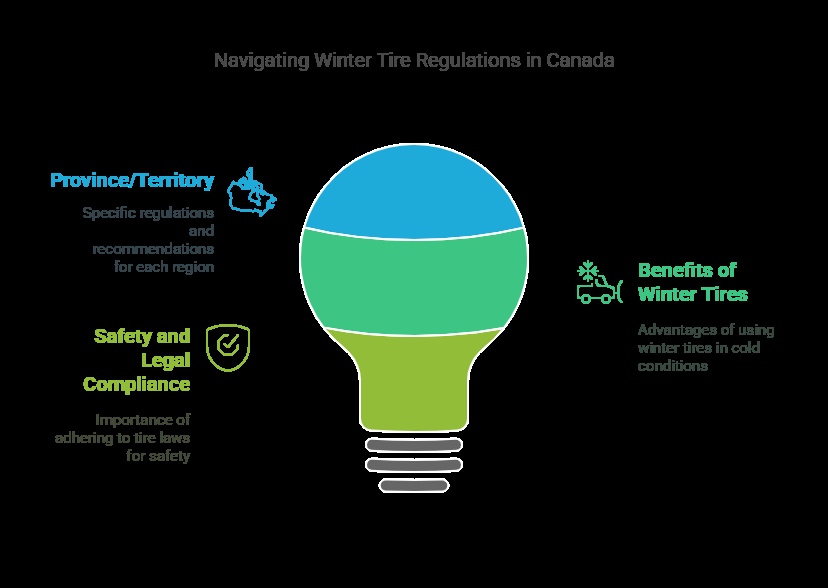
Understanding winter tire laws and recommendations in each Canadian province is essential for staying safe—and legal—on the road in 2025. With Canada’s icy roads, unpredictable snowfall, and long winters, many provinces either mandate or strongly recommend the use of winter tires during cold months. Here’s everything you need to know, province by province.
Why Winter Tires Matter in Canada
Winter tires are designed with special rubber compounds and deeper tread patterns to improve traction, braking, and control in temperatures below 7°C. All-season tires become hard and less grippy, making winter driving significantly more dangerous.
Key Benefits of Winter Tires:
- Improved grip on snow, slush, and ice
- Shorter braking distances in cold temperatures
- Reduced hydroplaning risk in wet and icy conditions
Now, let’s break down the current winter tire laws and best practices in every province and territory.
Province-by-Province Winter Tire Laws (2025)

✔ Quebec
- Law: Mandatory from December 1 to March 15
- Fines: Up to $300 if caught without certified winter tires
- Requirements: Tires must have the mountain snowflake symbol
Quebec was the first province to introduce mandatory winter tire laws. They apply to passenger vehicles and taxis. Rental cars must also comply.
✔ British Columbia
- Law: Required on many highways from October 1 to April 30
- Applies to: Designated routes (e.g., Coquihalla, Sea-to-Sky, and Highway 3)
- Requirements: M+S (Mud + Snow) tires or snowflake-rated winter tires
Look for signs on highway routes. Failure to comply can result in fines and being turned back at checkpoints.
✔ Ontario
- Law: Not mandatory
- Incentives: Insurance discounts (up to 5–15%) available
- Recommendation: Strongly advised from November to April
Though not required, Ontario winters are severe. Winter tires are crucial, especially in Northern Ontario and rural areas.
✔ Alberta
- Law: Not mandatory
- Recommendation: Advised from October through March
With its unpredictable weather, black ice, and snowstorms, Alberta drivers should always equip winter tires—even in urban areas like Calgary and Edmonton.
✔ Manitoba
- Law: Not mandatory
- Incentives: Low-interest winter tire financing via MPI
- Recommendation: Strongly recommended for all vehicles
MPI (Manitoba Public Insurance) offers a Winter Tire Program to help residents afford approved winter tires.
✔ Saskatchewan
- Law: Not mandatory
- Recommendation: Encouraged for better winter handling and safety
While there’s no legal requirement, snow and ice conditions in Saskatchewan make winter tires a smart investment.
✔ Nova Scotia
- Law: Not mandatory
- Incentives: Discounts on insurance may apply
Winter tire use is encouraged throughout Atlantic Canada for safety reasons, particularly on rural roads.
✔ New Brunswick
- Law: Not mandatory
- Recommendation: Winter tires are encouraged November through March
✔ Newfoundland and Labrador
- Law: Not mandatory
- Reality: Most drivers still install winter tires due to heavy snowfalls
✔ Prince Edward Island
- Law: Not mandatory
- Incentives: Some insurance companies offer winter tire discounts
✔ Territories (Yukon, NWT, Nunavut)
- Law: No official provincial laws
- Practice: Almost all drivers use winter tires due to extreme winter weather
How to Tell If Your Tires Are Winter Certified
Look for the Three-Peak Mountain Snowflake (3PMSF) symbol on the sidewall of your tire. This symbol indicates the tire meets severe snow service requirements. M+S (Mud and Snow) tires may not meet true winter performance standards but are allowed in BC.
When Should You Install Winter Tires?
Best time: When the temperature drops below 7°C consistently.
- Southern Canada: Mid to late October
- Northern Canada: Early October or even late September
How Much Do Winter Tires Cost in Canada (2025)?
- Budget set (4 tires): $500 – $800
- Mid-range set: $800 – $1,200
- Premium or performance winter tires: $1,200 – $1,800+
- Installation & changeover: $80 – $150 per season
Tip: Consider buying tires on rims to reduce seasonal changeover costs and extend the life of both tires and wheels.
FAQs About Winter Tires in Canada
Q1: Are all-season tires good enough for Canadian winters?
A: Not really. All-season tires lose traction in cold weather. Winter tires offer better grip, braking, and control below 7°C.
Q2: Can I use winter tires all year long?
A: It’s not recommended. Winter tires wear out faster in warm weather and reduce fuel efficiency.
Q3: Do I need winter tires if my car has AWD?
A: Yes! AWD helps with acceleration, but winter tires are critical for braking and cornering in snow or ice.
Q4: Are winter tires tax deductible?
A: No, but if your car is used for business, winter tires may be written off as a business expense. Check with your accountant.
Q5: What happens if I ignore winter tire rules?
A: In provinces like Quebec and parts of BC, you may face fines, denied insurance claims, or being turned away from snow routes.
Helpful Resources
- Quebec Winter Tire Law
- ICBC Winter Tire Requirements
- Manitoba Winter Tire Financing Program
- CAA Winter Tire Buying Guide
Want more cold weather driving tips? Explore our Winter Driving in Canada section for seasonal checklists, tire comparisons, and expert safety advice.
Complete Car Loan Guide for Canada & USA
Looking for the best auto loan rates? This guide covers car financing options in both Canada and the USA. Learn how to get low interest car loans, compare lenders, and apply online with ease.
Country-Specific Car Loan Guides
- Car Loan Guide – Canada (covers bank car loan offers and credit union car loans)
- Car Loan Guide – USA (includes auto loan refinancing and pre-approved auto loan tips)
Why Trust This Car Loan Guide?
We reference trusted resources like Ratehub’s Canadian car loan rankings and NerdWallet’s U.S. auto loan analysis. These comparisons provide real-time information on compare car loan rates and vehicle financing for bad credit.
How to Use This Guide
Step 1: Choose Your Country
Select Canada or USA for tailored details on online car loan application steps.
Step 2: Learn Eligibility
Check credit score requirements, down payment expectations, and loan terms for low interest car loans.
Step 3: Compare & Apply
Review lender offers, auto loan refinancing options, and repayment periods before applying.
Pro Tips for Smart Car Financing
- Check your credit score—higher scores unlock low interest car loans.
- Get a pre-approved auto loan—gives you more bargaining power.
- Compare car loan rates—across banks, credit unions, and online lenders.
- Watch out for markups—dealer financing may cost more than bank car loan offers.
Disclaimer: Loan terms and rates vary by lender, credit score, and location. Always confirm details directly with the financial institution before applying.