Should You Buy or Lease a Car in Canada? Pros and Cons Explained (2025)
Should you buy or lease a car in Canada? It’s one of the most common questions Canadian drivers ask when shopping for a new vehicle. Both options come with pros and cons depending on your lifestyle, budget, and driving habits. This guide breaks down the financial, practical, and personal factors to help you make the right choice.
Leasing vs Buying: What’s the Difference?
- Leasing: You pay to use the car for a set period (usually 2–4 years), then return it or buy it out.
- Buying: You pay to own the vehicle, either upfront or through financing, and can keep or sell it any time.
Let’s explore each option in detail and compare them side-by-side.
Pros of Leasing a Car in Canada
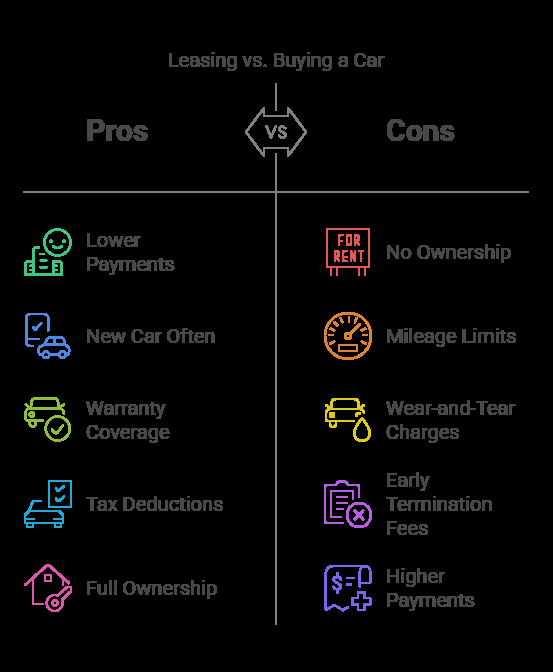
- Lower Monthly Payments: Leasing is generally cheaper month-to-month than financing a car loan.
- New Car Every Few Years: Great for drivers who like the latest features, tech, and styling.
- Warranty Coverage: Most lease terms are covered under the manufacturer’s warranty, reducing repair costs.
- Business Tax Deductions: Lease payments may be tax-deductible if the vehicle is used for work.
Cons of Leasing
- No Ownership: You’re paying to rent, not to own. No equity at the end.
- Mileage Limits: Most leases limit you to 16,000–24,000 km/year. Exceeding this adds penalties.
- Wear-and-Tear Charges: You may be billed for scratches, dents, or damage when returning the vehicle.
- Early Termination Fees: Ending a lease early is costly and complicated.
Pros of Buying a Car in Canada
- Full Ownership: Once paid off, the car is yours to keep, sell, or trade in.
- No Mileage Restrictions: Perfect for long commutes, family road trips, or rural driving.
- Long-Term Savings: Buying can be cheaper over time if you keep the car for 5+ years.
- Flexibility: You can customize, modify, or resell the vehicle as you please.
Cons of Buying
- Higher Monthly Payments: Financing typically costs more each month than leasing.
- Repair Costs After Warranty: You’ll be responsible for all repairs once the factory warranty expires.
- Depreciation: The car’s value drops quickly, especially in the first few years.
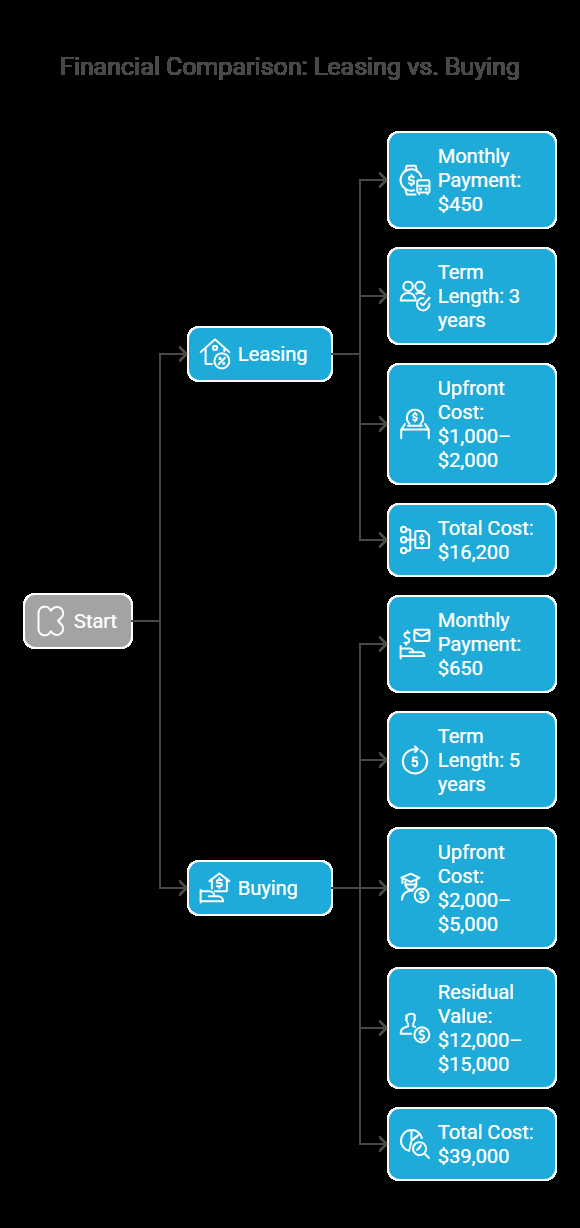
Financial Comparison Example (2025)
| Feature | Leasing | Buying (Financing) |
|---|---|---|
| Monthly Payment | $450 | $650 |
| Term Length | 3 years | 5 years |
| Upfront Cost | $1,000–$2,000 | $2,000–$5,000 |
| Residual/Trade Value | None (unless bought out) | $12,000–$15,000 after 5 years |
| Total Cost (est.) | $16,200 over 3 years | $39,000 over 5 years (minus trade-in value) |
Who Should Lease a Car?
- You drive under 20,000 km/year
- You like upgrading to a new car every 2–4 years
- You prefer lower monthly payments
- You use the car for business and want tax deductions
Who Should Buy a Car?
- You plan to keep the car for 5+ years
- You drive long distances regularly
- You want to build equity and resale value
- You prefer customizing or owning the car long-term
Tax Considerations in Canada
- Leasing: Tax is charged monthly on payments
- Buying: Full provincial and federal tax is charged upfront (can be rolled into financing)
- Business Use: CRA allows deductions for both methods if the car is used for business

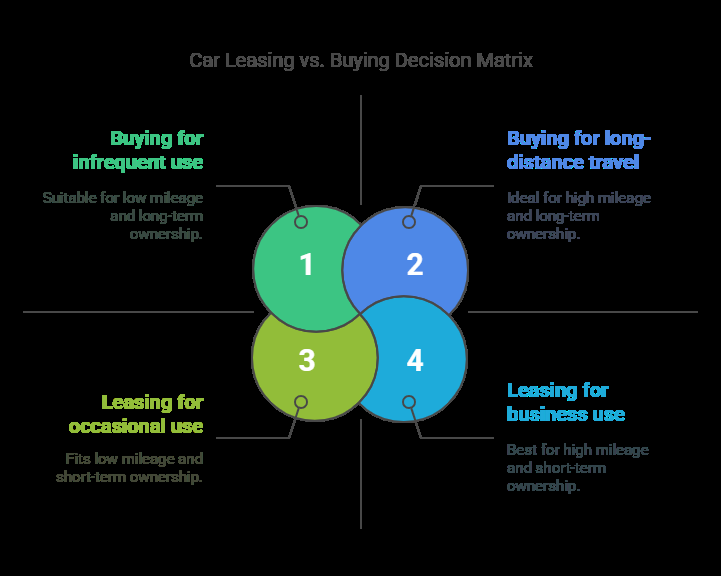
Car Leasing vs. Buying Decision Matrix
FAQs About Leasing vs Buying in Canada (2025)
Q1: Is it cheaper to lease or buy a car in Canada?
A: Leasing is cheaper short-term, but buying is more cost-effective if you keep the car beyond the loan period.
Q2: Can I buy my car at the end of a lease?
A: Yes. Most leases include a buyout option at a pre-agreed residual value.
Q3: Do lease payments count toward ownership?
A: No. Lease payments are like rent—you don’t build equity unless you buy the car after the lease ends.
Q4: What happens if I exceed the mileage limit?
A: You’ll be charged an overage fee (usually $0.10 to $0.25/km). If you drive a lot, buying might be better.
Q5: Does leasing require a credit check?
A: Yes. Leasing requires good credit, just like financing. Some dealers offer newcomer lease programs with extra conditions.
Helpful Resources
Need a more personalized breakdown? Explore our full Ownership & Leasing Decision Tools section for budget-based advice, calculators, and side-by-side comparisons for Canadian drivers.
Complete Car Loan Guide for Canada & USA
Looking for the best auto loan rates? This guide covers car financing options in both Canada and the USA. Learn how to get low interest car loans, compare lenders, and apply online with ease.
Country-Specific Car Loan Guides
- Car Loan Guide – Canada (covers bank car loan offers and credit union car loans)
- Car Loan Guide – USA (includes auto loan refinancing and pre-approved auto loan tips)
Why Trust This Car Loan Guide?
We reference trusted resources like Ratehub’s Canadian car loan rankings and NerdWallet’s U.S. auto loan analysis. These comparisons provide real-time information on compare car loan rates and vehicle financing for bad credit.
How to Use This Guide
Step 1: Choose Your Country
Select Canada or USA for tailored details on online car loan application steps.
Step 2: Learn Eligibility
Check credit score requirements, down payment expectations, and loan terms for low interest car loans.
Step 3: Compare & Apply
Review lender offers, auto loan refinancing options, and repayment periods before applying.
Pro Tips for Smart Car Financing
- Check your credit score—higher scores unlock low interest car loans.
- Get a pre-approved auto loan—gives you more bargaining power.
- Compare car loan rates—across banks, credit unions, and online lenders.
- Watch out for markups—dealer financing may cost more than bank car loan offers.
Disclaimer: Loan terms and rates vary by lender, credit score, and location. Always confirm details directly with the financial institution before applying.