

Buying a First Car in Canada as a New Immigrant: A Practical Guide (2025)
Buying a first car in Canada as a new immigrant can be both exciting and overwhelming. With different driving rules, vehicle options, and financing systems, it’s easy to feel lost. This practical 2025 guide walks you through every step—so you can confidently buy a safe, affordable, and reliable vehicle to start your Canadian journey right.
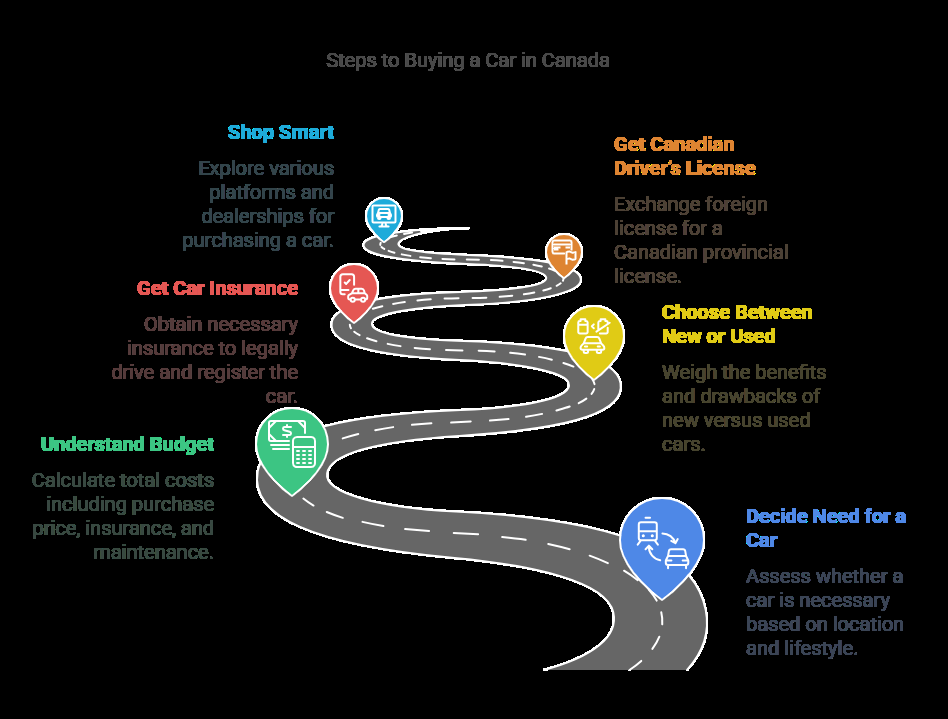
Step 1: Decide Whether You Really Need a Car
Before buying, ask yourself: do you need a car right away? If you’re living in major cities like Toronto, Vancouver, or Montreal, you may have access to excellent public transit. However, in smaller towns or for long-distance commutes, a vehicle may be essential.
- Big cities: Consider car sharing, rentals, or transit apps
- Suburbs or rural areas: A car may be your best option
Tip: If you’re still settling in, renting a car or using public transit for the first month can help you assess your needs without pressure.
Step 2: Understand Your Budget
Your budget should include more than just the car price. You’ll need to plan for insurance, taxes, fuel, registration, and maintenance.
Example: For a $12,000 used vehicle, your first-year costs might look like this:
- Down payment or full price: $12,000
- Insurance: $2,000/year (approx.)
- License plate & registration: $100–$300
- Winter tires (if needed): $600–$1,000
- Fuel & maintenance: $150–$250/month
Be realistic about monthly payments if you’re financing. Many immigrants begin with used cars to save money while building financial stability.
Step 3: Choose Between New vs. Used
✔ Buying New:
- More reliable and warranty coverage included
- Better financing options, especially through dealerships
- Expensive, higher insurance costs
✔ Buying Used:
- Lower upfront cost, lower insurance
- More options for cash buyers
- Higher risk if bought without inspection or vehicle history
Tip: A certified pre-owned vehicle from a reputable dealer may be the best of both worlds: used pricing with inspection and warranty coverage.
Step 4: Get Car Insurance (Required Before You Drive)
In Canada, you cannot legally drive or register your car without insurance. New immigrants may face higher rates if they don’t have Canadian driving experience.
What you need:
- Valid driver’s license (see Step 5)
- Vehicle information (VIN, make/model)
- Your address in Canada
Tip: Some provinces allow you to transfer your international driving experience to reduce premiums. Ask your insurer if a driving record or letter from your home country helps.
Step 5: Get a Canadian Driver’s License
If you haven’t already, you’ll need to exchange your foreign license for a provincial one. The process varies by province.
- Ontario: G1 written test → G2 road test (can be waived with experience)
- BC: Knowledge test + road test (or direct exchange depending on country)
- Alberta & Quebec: Often require proof of experience and a vision test
Visit your province’s website for full details on the graduated licensing system and any documents needed from your home country.
Step 6: Shop Smart – Where to Buy
Options for car shopping in Canada:
- AutoTrader.ca – Canada’s largest vehicle marketplace
- Kijiji Autos – Good for local private sellers
- Authorized dealerships – Best for financing and warranty
- Facebook Marketplace – For quick local deals (be cautious)
Important tips:
- Get a vehicle history report (CARFAX Canada)
- Have the vehicle inspected by a mechanic before purchase
- Always test drive the car before you buy it
Step 7: Register Your Car & Get Plates
Once insured, take your documents to your provincial registry office to register the car and get your license plates.
You’ll need:
- Bill of sale
- Proof of insurance
- Government-issued ID
- Safety inspection certificate (required in some provinces)
Once registered, you’ll receive a plate, registration slip, and temporary tag (in some provinces).
Step 8: Know the Ongoing Costs
After your initial purchase, you’ll still need to budget for:
- Fuel: $100–$300/month
- Insurance: $125–$250/month
- Maintenance: Oil changes, tire rotations, and more
- License renewals: Usually every year or two
Tip: Avoid unnecessary upgrades like high-end sound systems or oversized rims. Focus on safe, reliable, and fuel-efficient transportation in your first year.
FAQs for New Immigrants Buying Cars in Canada
Q1: Can I buy a car in Canada without a permanent resident (PR) card?
A: Yes, you can. As long as you have a valid address, identification, and the ability to pay or finance, you can purchase and register a car.
Q2: Do I need a credit history to finance a car?
A: No, but it helps. Some dealerships offer “newcomer financing” without Canadian credit, often requiring a larger down payment or proof of employment.
Q3: Should I buy from a dealer or private seller?
A: Dealers offer more security (warranty, financing, inspections), while private sellers are usually cheaper—but come with more risk.
Q4: Is winter driving hard in Canada?
A: It can be if you’re not used to snow and ice. Buy good winter tires and take a winter driving course if you’re unfamiliar with slippery conditions.
Q5: Are there government rebates for buying a vehicle?
A: If you’re buying a hybrid or electric vehicle, check for federal and provincial EV incentives on the Transport Canada iZEV page.
Helpful Resources
- Ontario Vehicle Registration Guide
- CARFAX Canada – Vehicle History Reports
- RBC Newcomer Vehicle Financing Program
- Settlement.org – For Newcomers in Ontario
Looking for more newcomer tips? Explore our full Immigrant Car Guides section for vehicle checklists, insurance advice, and Canadian driving tips.
Complete Car Loan Guide for Canada & USA
Looking for the best auto loan rates? This guide covers car financing options in both Canada and the USA. Learn how to get low interest car loans, compare lenders, and apply online with ease.
Country-Specific Car Loan Guides
- Car Loan Guide – Canada (covers bank car loan offers and credit union car loans)
- Car Loan Guide – USA (includes auto loan refinancing and pre-approved auto loan tips)
Why Trust This Car Loan Guide?
We reference trusted resources like Ratehub’s Canadian car loan rankings and NerdWallet’s U.S. auto loan analysis. These comparisons provide real-time information on compare car loan rates and vehicle financing for bad credit.
How to Use This Guide
Step 1: Choose Your Country
Select Canada or USA for tailored details on online car loan application steps.
Step 2: Learn Eligibility
Check credit score requirements, down payment expectations, and loan terms for low interest car loans.
Step 3: Compare & Apply
Review lender offers, auto loan refinancing options, and repayment periods before applying.
Pro Tips for Smart Car Financing
- Check your credit score—higher scores unlock low interest car loans.
- Get a pre-approved auto loan—gives you more bargaining power.
- Compare car loan rates—across banks, credit unions, and online lenders.
- Watch out for markups—dealer financing may cost more than bank car loan offers.
Disclaimer: Loan terms and rates vary by lender, credit score, and location. Always confirm details directly with the financial institution before applying.


1 thought on “Buying a First Car in Canada as a New Immigrant”